








Toxicology Litigation Support
Vinyl Chloride
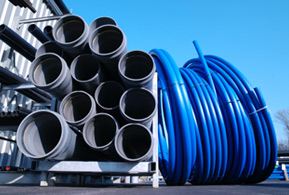
Vinyl chloride monomer is used to make PVC piping among other things. Vinyl chloride is sweet smelling and was used in the 1950s and 1960s as a vehicle in spray paints and hair sprays. Workers who make vinyl chloride or PVC piping are subjected to the vapors of vinyl chloride as well as the hairdressers who were exposed to very significant concentrations of vinyl chloride when it was a component of hair spray. Both have experienced the carcinogenic effects of vinyl chloride.
Vinyl chloride is a human carcinogen causing a rare liver cancer called angiosarcoma. It has been shown to cause other liver cancers and possibly brain and lung cancers. Vinyl chloride is a vascular toxin, and can not only cause the vascular liver cancer called angiosarcoma, but can also disrupt blood flow to the extremities, causing a deterioration of bone resulting in a condition called acroosteolysis, the dissolution of bone. This conditions begins with a numbing of the fingertips followed by their disfigurement as a result of bone loss.
Dr. Parent has studied the effects of vinyl chloride on animals and man and has constructed a time line of knowledge related to the carcinogenic effects of vinyl chloride. This time line is based on published literature and internal company documents and demonstrates a deliberate action by industry to conceal the fact that vinyl chloride is carcinogenic. He has written causation reports relating vinyl chloride exposure to angiosarcoma. View a report below and selected references from Dr. Parent’s data base of more than 600 peer-reviewed publications on vinyl chloride.
Selected References
Ablin, R. J., Bartkus, J. M. and Gonder, M. J., Immunoquantitation of Factor VIII-Related Antigen (von Willebrand Factor Antigen) in prostate cancer. Cancer Letters, 40(3), 283-289 (1988).
Anonymous, A scientific basis for the risk assessment of vinyl chloride. Developed jointly by the members of the Committee on the Evaluation of Carcinogenic Substances, National Health Council of The Netherlands. Regulatory Toxicology and Pharmacology, 7(1), 120-127 (1987).
Arnaud, A., DeSanti, P. P., Garbe, L., Payan, H. and Charpin, J. Polyvinyl chloride pneumoconiosis. Thorax, 33(1), 19-25 (1978).
Awara, W. M., El-Nabi, S. H. and El-Gohary, M., Assessment of vinyl chloride-induced DNA damage in lymphocytes of plastic industry workers using a single-cell gel electrophoresis technique. Toxicology, 128(1), 9-16 (1998).
Baretta, E. D., Stewart, R. D., Mutchler, J. E., Monitoring exposures to vinyl chloride vapor: breath analysis and continuous air sampling. American Industrial Hygiene Association Journal, 30(6), 537-544 (1969).
Barton, H. A., Creech, J. R., Godin, C. S., Randall, G. M. and Seckel, C. S., Chloroethylene mixtures: pharmacokinetic modeling and in vitro metabolism of vinylchloride, trichloroethylene, and trans-1,2-dichloroethylene in rat. Toxicology and Applied Pharmacology, 130(2), 237-247 (1995).
Bartsch, H. and Montesano, R., Mutagenic and carcinogenic effects of vinyl chloride. Mutation Research, 32(2), 93-114 (1975).
Baxter, P. J. and Fox, A. J., Angiosarcoma of the liver in PVC fabricators. Lancet, 1(953), 245-246 (1976).
Belli, S., Bertazzi, P. A., Comba, P., Foa, V., Maltoni, C., Masina, A., Pirastu, R., Reggiani, A. and Vigotti, M. A., A cohort study on vinyl chloride manufacturers in Italy: study design and preliminary results. Cancer Letters, 35(3), 253-261 (1987).
Berk, P. D., Martin, J. F., Young, R. S., Creech, J., Selikoff, I.J., Falk, H., Watanabe, P., Popper, H. and Thomas, L. Vinyl chloride-associated liver disease. Annals of Internal Medicine, 84(6), 717-730 (1976).
Berk, P. D., Martin, J. F. and Waggoner, J. G., Persistence of vinyl-chloride-induced liver injury after cessation of exposure. Annals of the New York Academy of Sciences, 246, 70-77 (1975).
Bhandari, J. C., Non-reversibility of vinyl chloride carcinogenesis in rodents. Toxicologic Pathology, 11(2), 181-187 (1983).
Black, C. M., Walker, A. E., Catoggio, L. J., Welsh, K. I., Bernstein, R. M., McGregor, A. R. and Lloyd Jones, J. K., Genetic susceptibility to scleroderma-like syndrome induced by vinyl chloride. Lancet, 1(8314-8315), 53-55 (1983).
Black, C. M., Pereira, S., McWhirter, A., Welsh, K. and Laurent, R., Genetic susceptibility to scleroderma-like syndrome in symptomatic and asymtomatic workers exposed to vinyl chloride. Journal of Rheumatology, 13(6), 1059-1062 (1986).
Black, C. M., Welsh, K. I., Maddison, P. J., Jayson, M. I. and Bernstein, R. M., HLA antigens, autoantibodies and clinical subsets in scleroderma. British Journal of Rheumatology, 23(4), 267-271 (1984).
Blendis, L. M., Smith, P. M., Lawrie, B. W., Stephens, M. R. and Evans, W. D., Portal hypertension in vinyl chloride monomer workers. A hemodynamic study. Gastroenterology, 75(2), 206-211 (1978).
Bosetti, C., La Vecchia, C., Lipworth, L., McLaughlin, J. K., Occupational exposure to vinyl chloride and cancer risk: a review of the epidemiologic literature. European Journal of Cancer Prevention, 12(5), 427-430 (2003).
Carvalho, D., Savage, C. O. S., Black, C. M. and Pearson, J. D., IgG antiendothelial cell autoantibodies from scleroderma patients induce leukocyte adhesion to human vascular endothelial cells in vitro. Journal of Clinical Investigation, 97(1), 111-119 (1996).
Catoggio, L. J., Bernstein, R. M., Black, C. M., Hughes, G. R. and Maddison, P. J., Serological markers in progressive systemic sclerosis: clinical correlations. Annals of the Rheumatic Diseases, 42(1), 23-27 (1983).
Cejka, J., Enzyme Immunoassay for Factor VIII-Related Antigen. Clinical Chemistry, 28(6), 1356-1358 (1982).
Cheng, K. S., Tiwari, A., Boutin, A., Denton, C. P., Black, C. M., Morris, R., Seifalian, A. M. and Hamilton, G., Differentiation of primary and secondary Raynaud’s disease by carotid arterial stiffness. European Journal of Vascular and Endovascular Surgery, 25(4), 336-341 (2003).
Cherkas, L. F., Howell, K., Carter, L., Black, C. M. and MacGregor, A. J., The use of portable radiometry to assess Raynaud’s phenomenon: a practical alternative to thermal imaging. Rheumatology, 40(12), 1384-1387 (2001).
Cherkas, L. F., Carter, L., Spector, T. D., Howell, K. J., Black, C. M. and McGregor, A. J., Use of thermographic criteria to identify Raynaud’s phenomenon in a population setting. Journal of Rheumatology, 30(4), 720-722 (2003).
Chivers, C. P., Lawrence-Jones, C. and Paddle, C. M., Lung function in workers exposed to polyvinylchloride dust. British Journal of Industrial Medicine, 37, 147-151 (1980).
Clemmesen, J., Mutagenicity and teratogenicity of vinyl chloride monomer (VCM). Epidemiological evidence. Mutation Research, 98(1), 97-100 (1982). [CTX-007797 . VC-0018]
Cogliano, V. J., Hiatt, G. F. and Den. A., Quantitative cancer assessment for vinyl chloride: indications of early-life sensitivity. Toxicology, 111(1-3), 21-28 (1996).
Cook, W. A., Giever, P. M., Dinman, B. D., Magnuson, H. J., Occupational acroosteolysis. II. An industrial hygiene study. Archives of Environmental Health, 22(1), 74-82 (1971).
Cordasco, E. M., Demeter, S. L., Kerkay, J., Van Ordstrand, H. S., Lucas, E. V., Chen, T., Golish, J. A., Pulmonary manifestations of vinyl and polyvinyl chloride (interstitial lung disease). Newer aspects. Chest, 78(6), 828-834 (1980).
Creech, J. L. and Makk, L., Liver disease among polyvinyl chloride production workers. Annals of the New York Academy of Sciences, 246, 88-94 (1975).
Doll, R., Effects of exposure to vinyl chloride an assessment of the evidence. Scandanavian Journal of Work and Environmental Health, 14(2), 61-78 (1988).
Froment, O., Marion, M. J., Lepot, D., Contassot, J. C. and Trepo, C., Immunoquantitation of von Willebrand factor (Factor VIII- related antigen) in vinyl chloride exposed workers. Cancer Letters, 61(3), 201-206 (1991).
Garcia-Barcina, M., Lukomska, B., Gawron, W., Winnock, M., Vidal-Vanaclocha, F., Bioulac-Sage, P., Balabaud, C. and Olszewski, W., Expression of cell adhesion molecules on liver-associated lymphocytes and their ligands on sinusoidal lining cells in patients with benign and malignant liver disease. American Journal of Pathology, 146(6), 1406-1413 (1995).
Gedigke, P., Muller, R. and Bechtelsheimer, H., Morphology of liver damage among polyvinyl chloride production workers. A report on 51 cases. Annals of the New York Academy of Sciences, 246, 278-285 (1975).
Gendi, N. S., Welsh, K. I., VanVenrooij, W. J., Vancheeswaran, R., Gilroy, J. and Black, C. M., HLA type as a predictor of mixed connective tissue disease differentiation. Ten-year clinical and immunogenetic followup of 46 patients. Arthritis and Rheumatism, 38(2), 259-266 (1995).
Giri, A. K., Genetic toxicology of vinyl chloride--a review. Mutation Research, 339(1), 1-14 (1995).
Grace, J. R., Reynolds, L., McClain, M. and McClain,C. J., The serum hyaluronic acid concentration is a screening test for angiosarcoma in plant workers exposed to vinyl chloride. Poster paper presented at “Research Louisville” Conference on October 29 (2002).
Hansteen, I. L., Hillestad, L., Thiis-evensen, E. and Heldaas, S. S., Effects of vinyl chloride in man: a cytogenetic follow-up study. Mutation Research, 51(2), 271-278 (1978).
Heimann, H., Lilis, R., Hawkins, D. T., A bibliography on the toxicology of vinyl chloride and polyvinyl chloride. Annals of the New York Academy of Sciences, 246, 322-337 (1975).
Hellstrom, B. and Myhre, K., A comparison of some methods of diagnosing Raynaud’s phenomena of occupational origin. British Journal of Industrial Medicine, 28(3), 272-279 (1971).
Jaffe, E. A., Hoyer, L. W. and Nachman, R. L., Synthesis of antihemophilic factor antigen by cultured human endothelial cells. Journal of Clinical Investigation, 52(11), 2757-2764 (1973).
James, J. P., Stevens, T. R., Hall, N. D., Maddison, P. J., Goulding, N. J., Silman, A., Holligan, S. and Black, C., Factor VIII related antigen in connective tissue disease patients and relatives. British Journal of Rheumatology, 29(1), 6-9 (1990).
Lewis, R., Vinyl chloride and polyvinyl chloride. Occupational Medicine: State of the Art Reviews, 14(4), 719-741 (1999).
Liss, G. M., Greenberg, R. A. and Tamburro, C. H., Use of serum bile acids in the identification of vinyl chloride hepatotoxicity. American Journal of Medicine, 78(1), 68-76 (1985).
Maricq, H. R., Johnson, M. N., Whetstone, C. L. and LeRoy, E. C., Capillary abnormalities in polyvinyl chloride production workers. Journal of the American Medical Association, 236(12), 1368-1371 (1976).
Nusinow, S. R., Federici, A. B., Zimmerman, T. S. and Curd, J. G., Increased vonWillebrand Factor Antigen in the plasma of patients with vasculitis. Arthritis and Rheumatism, 27(12), 1405-1410 (1984).
Ostlere, L. S., Harris, D., Buckley, C., Black, C. and Rustin, M. H. A., Atypical systemic sclerosis following exposure to vinyl chloride monomer. A case report and review of the cutaneous aspects of vinyl chloride disease. Clinical and Experimental Dermatology, 17(3), 208-210 (1992).
Patel, K., Lajoie, A., Heaton, S., Pianko, S., Behling, C. A., Bylund, D., Pockros, P. J., Blatt, L. M., Conrad, A. and McHutchinson, J. G., Clinical use of hyaluronic acid as a predicator of fibrosis change in hepatitis C. Journal of Gastroenterology and Hepatology 18(3), 253-257 (2003).
Pirisi, M., Vitulli, D., Falleti, E., Fabris, C., Soardo, G., DelForno, M., Bardus, P., Gonano, F. and Bartoli, E., Increased soluble ICAM-1 concentration and impaired delayed-type hypersensitivity skin tests in patients with chronic liver disease. Journal of Clinical Pathology, 50(1), 50-53 (1997).
Pokharna, R. K., Garg, P. K., Gupta, S. D., Dutta, U. and Tandon, R. K.., Primary epitheloid haemangioendothelioma of the liver - case report and review of the literature. Journal of Clinical Pathology, 50(12), 1029-1031 (1997).
Reinders, M. E., vanWagensveld, B. A., van Gulik, T. M., Frederiks, W. M., Chamuleau, R. A., Endert, E. and Klopper, E. J., Hyaluronic acid uptake in the assessment of sinusoidal endothelial cell damage after cold storage and normothermic reperfusion of rat livers. Transplant International, 9(5), 446-453 (1996).
Shi-Wen, X., Panesar, M., Vancheeswaran, R., Mason, J., Haskard, D., Black, C., Olsen, I., and Abraham, D., Expression and shedding of intracellular adhesion molecule 1 and lymphocyte function-associated antigen 3 by normal and scleroderma fibroblasts. Effects of interferon-gamma, tumor necrosis factor alpha and estrogen. Arthritis and Rheumatism, 37(11), 1689-1697 (1994).
Soresi, M., Cervello, M., Lipani, G., Carroccio, A., Cartabellotta, A., Marasa, L., Casto, C., Virruso, L. and Montalto, G., Circulating intercellular adhesion molecule-1 in patients with hepatocellular carcinoma. European Journal of Gastroenterology and Hepatology, 9(8), 805-809 (1997).
Stratton, R. J., Coghlan, J. G., Pearson, J. D., Burns, A., Sweny, P., Abraham, D. J. and Black, C. M., Different patterns of endothelial cell activation in renal and pulmonary vascular disease in scleroderma. Quarterly Journal of Medicine, 91(8), 561-566 (1998).
Tamaki, S., Ueno, T., Torimura, T., Sata, M. and Tanikawa, K., Evaluation of hyaluronic acid binding ability of hepatic sinusoidal endothelial cells in rats with liver cirrhosis. Gastroenterology, 111(4), 1049-1057 (1996).
Tamburro, C. H. and Liss, G. M., Tests for hepatotoxicity: usefulness in screening workers. Journal of Occupational Medicine, 28(10), 1034-1044 (1986).
Taylor, K. J. W., Barrett, J. J., Williams, D. M. J., Smith, P. M. and Duck, B. W., Preliminary results of grey-scale ultrasnography in the detection of vinyl chloride related liver and spleen disease. Proceedings of the Royal Society of Medicine, 69, 292-295 (1976).
White, P. G., Adams, H. and Smith, P. M., The computed tomographic appearance of angiosarcoma of the liver. Clinical Radiology, 48, 321-325 (1993).
Williams, D. M. J., Smith, P. M., Taylor, K. J. W., Crossley, I. R. and Duck, B. W., Monitoring liver disorders in vinyl chloride monomer workers using greyscale ultrasonography. British Journal of Industrial Medicine, 33, 152-157 (1976).
Williams, A. M., Langley, P. G., Osei-Hwediah, J., Wendon, J. A. and Hughes, R.D., Hyaluronic acid and endothelial damage due to paracetamol-induced hepatotoxicity. Liver, 23(2), 110-115 (2003).
Woolf, A. D., Wakerley, G., Wallington, T. B., Scott, G. D. I. and Dieppe, P. A., Factor VIII related antigen in the assessment of vasculitis. Annals of the Rheumatic Diseases, 46, 441-447 (1987).
Yamaguchi, N., Tokushige, K., Haruta, I., Yamauchi, K. and Hayashi, N., Analysis of adhesion molecules in patients with idiopathic portal hypertension. Journal of Gastroenterology and Hepatology, 14(4), 364-369 (1999).

Causation Reports
- Benzene
- Carbon Monoxide - NEW
- Chlorine Letter Report - NEW
- Ephedrine
- Hexavalent Chromium - NEW
- Lead - NEW
- Lindane
- Manganese and Welding Fumes
- Marijuana Letter Report - NEW
- Methadone
- Methotrexate Letter Report - NEW
- Ozone - NEW
- Sulfur Dioxide - NEW
- Vinyl Chloride
- Vioxx
Toxicology Notes and Literature
- Alcohol Notes
- Arsenic References
- Cocaine References
- Carbon Monoxide Notes
- Creosote Notes
- Diesel Fumes
- Dramshop Blurb
- Marijuana References
- Ozone Blurb
Toxicology Litigation Support
- Class Action & Toxic Tort
- Expert Witness & Trial Support
- Insurance Defense & Workers Compensation
- Chinese Dry Wall & Slide Presentation
- Causation Slide Presentation
- Structuring an Expert Report Slide Presentation
- 1,4 - Dioxane
- Alcohol
- Arsenic
- Baycol
- Cocaine
- Creosote
- Diesel Fumes
- Fentanyl
- Formaldehyde
- Marijuana
- Oil Spills
- PCBs and Dioxins
- Perchloroethylene, Trichlorothylene and Chlorinated Hydrocarbons
- Phenylpropanolamine (PPA)
- Zyprexa