








Toxicology Litigation Support
Fentanyl
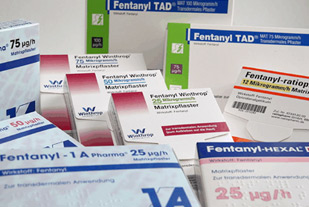
The Fentanyl Transdermal System, often marketed as the Duragesic Patch, is a medical device, and several batches have been recalled because of leakage resulting in death in many cases. The drug Fentanyl is µ-antagonist opioid which is 50 to 100 times more potent than morphine; consequently, it is frequently prescribed incorrectly resulting in numerous central nervous system effects and in many cases, death. Care must be taken with regard to interactions with other drugs, particularly those which are metabolized by or inhibit the cytochrome P450 3A4 isoenzyme system. Other drugs that interact with the central nervous system such as other opioids, sedatives, hypnotics, tranquilizers (particularly benzodiazepines), general anesthetics, phenothiazines, muscle relaxants, and alcohol are known to result in respiratory depression, hypotension, sedation, coma, and death when administered with the Fentanyl Patch. Numerous death cases have been reported in the literature. Dr. Parent has provided causation testimony in several of these cases. Selected references are provided below.
Selected References
Anderson, D. T. and Muto, J. J., Duragesic transdermal patch: postmortem tissue distribution of fentanyl in 25 cases. Journal of Analytical Toxicology, 24(7), 627-634 (2000).
Anonymous, Warning on fentanyl patch. FDA Consumer, 39(5), 4 (2005).
Biedrzycki, O. J., Bevan, D. and Lucas, S., Fatal overdose due to prescription fentanyl patches in a patient with sickle cell/beta-thalassemia and acute chest syndrome: A case report and review of the literature. American Journal of Forensic Medicine and Pathology, 30(2), 188-190 (2009). [CTX-040138]
Chaturvedi, A. K., Rao, N. G. and Baird, J. R., A death due to self-administered fentanyl. Journal of Analytical Toxicology, 14(6), 385-387 (1990).
Cherng, C. H. and Wong, C. S., Effect of fentanyl on lidocaine-induced convulsions in mice. Pharmacology, 75(1), 1-4 (2005).
Coopman, V., Cordonnier, J., Pien, K. and Van Varenbergh, D., LC-MS/MS analysis of fentanyl and norfentanyl in a fatality due to application of multiple Durogesic transdermal therapeutic systems. Forensic Science International, 169(2-3), 223-227 (2007).
Edinboro, L. E., Poklis, A., Trautman, D., Lowry, S., Backer, R. and Harvey, C. M., Fatal fentanyl intoxication following excessive transdermal application. Journal of Forensic Science, 42(4), 741-743 (1997).
Flannagan, L. M., Butts, J. D. and Anderson, W. H., Fentanyl patches left on dead bodies -- potential source of drug for abusers. Journal of Forensic Science, 41(2), 320-321 (1996).
Flannagan, L. M., Butts, J. D. and Anderson, W. H., Fentanyl patches left on dead bodies -- potential source of drug for abusers. Journal of Forensic Science, 41(2), 320-321 (1996).
Fodale, V., Mafrica, F., Santamaria, L. B. and Coleman, J. J., Killer fentanyl: is the fear justified? Expert Opinion on Drug Safety, 7(3), 213-217 (2008).
Garriott, J. C., Rodriguez, R. and Di Maio, V. J., A death from fentanyl overdose. Journal of Analytical Toxicology, 8(6), 288-289 (1984).
Goetz, A. M., Rogers, P. L., Schlichtig, R., Muder, R. R., Diven, W. F. and Prior, R. B., Adult respiratory distress syndrome associated with epidural fentanyl infusion. Critical Care Medicine, 22(10), 1579-1583 (1994). [CTX-040164]
Hartung, D. M., Middleton, L., Haxby, D. G., Koder, M., Ketchum, K. L. and Chou, R., Rates of adverse events of long-acting opioids in a state Medicaid program. Annals of Pharmacotherapy, 41(6), 921-928 (2007).
Henderson, G. L., Fentanyl-related deaths: demographics, circumstances, and toxicology of 112 cases. Journal of Forensic Science, 36(2), 422-433 (1991). [CTX-040166]
Hull, M. J., Juhascik, M., Mazur, F., Flomenbaum, M. A. and Behonick, G. S., Fatalities associated with fentanyl and co-administered cocaine or opiates. Journal of Forensic Science, 52(6), 1383-1388 (2007).
Jakobsson, M. and Strang, P., Fentanyl patches for the treatment of pain in dying cancer patients. Anticancer Research, 19(5C), 4441-4442 (1999).
Jumbelic, M. I., Deaths with transdermal Fentanyl patches. American Journal of Forensic Medicine and Pathology, Epublication ahead of print, November 13 (2009).
Kramer, C. and Tawney, M., A fatal overdose of transdermally administered fentanyl. Journal of the American Osteopathic Association, 98(7), 385-386 (1998).
Kronstrand, R., Druid, H., Holmgren, P. and Rajs, J., A cluster of fentanyl-related deaths among drug addicts in Sweden. Forensic Science International, 88(3), 185-193 (1997).
Levine, B., Goodin, J. C. and Caplan, Y. H., A fentanyl fatality involving midazolam. Forensic Science International, 45(3), 247-251 (1990).
Luckenbill, K., Thompson, J., Middleton, O., Kloss, J. and Apple, F., Fentanyl postmortem redistribution: preliminary findings regarding the relationship among femoral blood and liver and heart tissue concentrations. Journal of Analytical Toxicology, 32(8), 639-643 (2008).
Martin, T. L., Woodall, K. L. and McLellan, B. A., Fentanyl-related deaths in Ontario, Canada: toxicological findings and circumstances of death in 112 cases (2002-2004). Journal of Analytical Toxicology, 30(8), 603-610 (2006).
Menahem, S. and Shvartzman, P., High-dose fentanyl patch for cancer pain. Journal of the American Board of Family Practice, 17(5), 388-390 (2004).
Nelson, L. and Schwaner, R., Transdermal fentanyl: pharmacology and toxicology. Journal of Medical Toxicology, 5(4), 230-241 (2009).
Nugent, M., Davis, C., Brooks, D. and Ahmedzai, S. H., Long-term observations of patients receiving transdermal fentanyl after a randomized trial. Journal of Pain and Symptom Management, 21(5), 385-391 (2001).
Olson, K. N., Luckenbill, K., Thompson, J., Middleton, O., Geiselhart, R., Mills, K. M., Kloss, J. and Apple, F. S., Postmortem redistribution of fentanyl in blood. American Journal of Clinical Pathology, 133(3), 447-453 (2010).
Prodduturi, S., Sadrieh, N., Wokovich, A. M., Doub, W. H., Westenberger, B. J. and Buhse, L., Transdermal delivery of fentanyl from matrix and reservoir systems: Effect of heat and compromised skin. Journal of Pharmaceutical Sciences, Epublication ahead of print, December 4 (2009).
Radbruch, L., Sabatowski, R., Petzke, F., Brunsch-Radbruch, A., Grond, S. and Lehmann, K. A., Transdermal fentanyl for the management of cancer pain: a survey of 1005 patients. Palliative Medicine, 15(4), 309-321 (2001).
Schumann, H., Erickson, T., Thompson, T. M., Zautcke, J. L. and Denton, J. S., Fentanyl epidemic in Chicago, Illinois and surrounding Cook County. Clinical Toxicology (Philadelphia), 46(6), 501-506 (2008).
Sinz, E. H., Kofke, W. A. and Garman, R. H., Phenytoin, midazolam, and naloxone protect against fentanyl-induced brain damage in rats. Anesthesia and Analgesia, 91(6), 1443-1449 (2000).
Smialek, J. E., Levine, B., Chin, L., Wu, S. C. and Jenkins, A. J., A fentanyl epidemic in Maryland 1992. Journal of Forensic Science, 39(1), 159-164 (1994).
Teske,J., Weller, J. P., Larsch, K., Trger, H. D. and Karst, M., Fatal outcome in a child after ingestion of a transdermal fentanyl patch. International Journal of Legal Medicine, 121(2), 147-151 (2007).
Tharp, A. M., Winecker, R. E. and Winston, D .C., Fatal intravenous fentanyl abuse: four cases involving extraction of fentanyl from transdermal patches. American Journal of Forensic Medicine and Pathology, 25(2), 178-181 (2004).
Thompson, J. G., Baker, A. M., Bracey, A. H., Seningen, J., Kloss, J. S., Strobl, A. Q. and Apple, F. S., Fentanyl concentrations in 23 postmortem cases from the hennepin county medical examiner's office. Journal of Forensic Science, 52(4), 978-981 (2007).
Wiesbrock, U. O., Rochholz, G., Franzelius, C., Schwark, T. and Grellner, W., Excessive use of fentanyl patches as the only means of suicide. Archiv fur Kriminologie, 222(1-2), 23-30 (2008).
Woodall, K. L., Martin, T. L. and McLellan, B. A., Oral abuse of fentanyl patches (Duragesic): seven case reports. Journal of Forensic Science, 53(1), 222-225 (2008).

Causation Reports
- Benzene
- Carbon Monoxide - NEW
- Chlorine Letter Report - NEW
- Ephedrine
- Hexavalent Chromium - NEW
- Lead - NEW
- Lindane
- Manganese and Welding Fumes
- Marijuana Letter Report - NEW
- Methadone
- Methotrexate Letter Report - NEW
- Ozone - NEW
- Sulfur Dioxide - NEW
- Vinyl Chloride
- Vioxx
Toxicology Notes and Literature
- Alcohol Notes
- Arsenic References
- Cocaine References
- Carbon Monoxide Notes
- Creosote Notes
- Diesel Fumes
- Dramshop Blurb
- Marijuana References
- Ozone Blurb
Toxicology Litigation Support
- Class Action & Toxic Tort
- Expert Witness & Trial Support
- Insurance Defense & Workers Compensation
- Chinese Dry Wall & Slide Presentation
- Causation Slide Presentation
- Structuring an Expert Report Slide Presentation
- 1,4 - Dioxane
- Alcohol
- Arsenic
- Baycol
- Cocaine
- Creosote
- Diesel Fumes
- Fentanyl
- Formaldehyde
- Marijuana
- Oil Spills
- PCBs and Dioxins
- Perchloroethylene, Trichlorothylene and Chlorinated Hydrocarbons
- Phenylpropanolamine (PPA)
- Zyprexa